What are custom enamel pins, really?
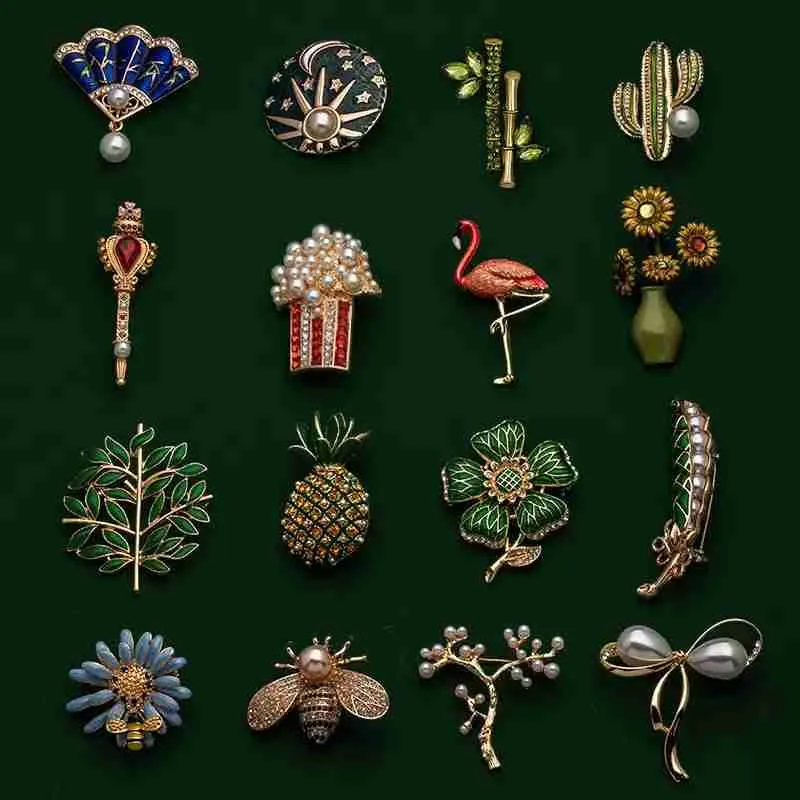
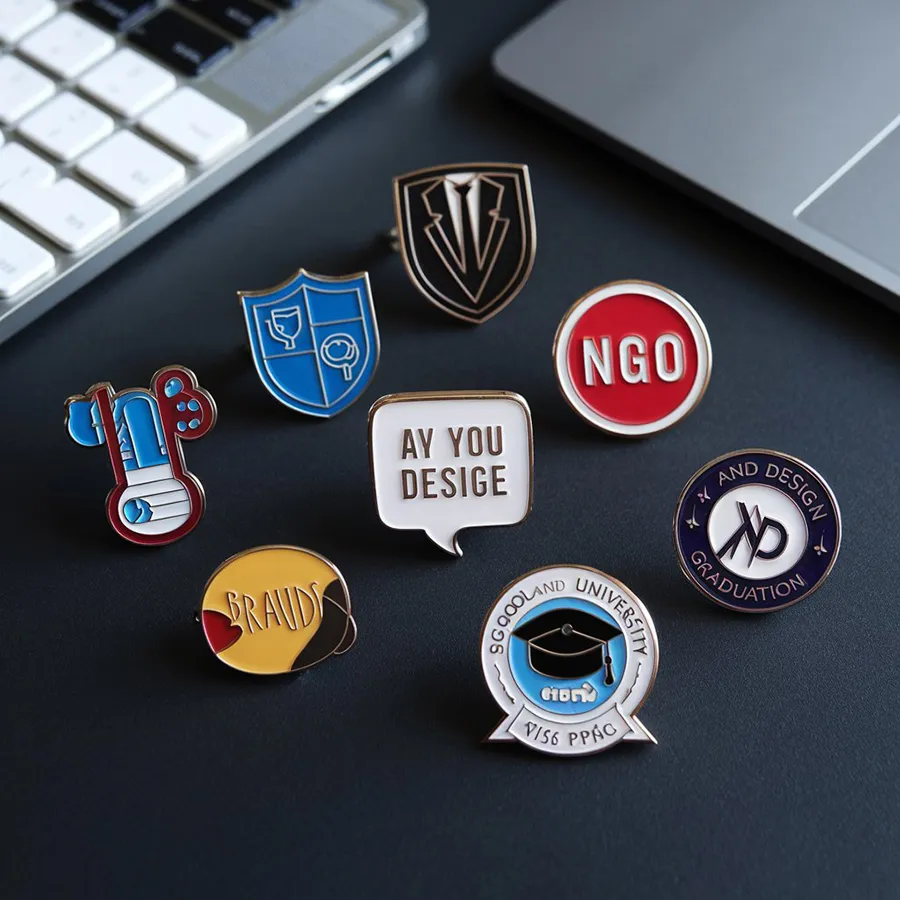
Custom enamel pins are metal pins with recessed areas filled (or not filled) with colored enamel. They typically have a polished or plated metal outline that gives the design a tactile, high-end look.
Most buyers see custom enamel pins as the “classic” collectible pin style because they feel substantial in hand and hold up well over time.
What are printed pins, and how do they differ?
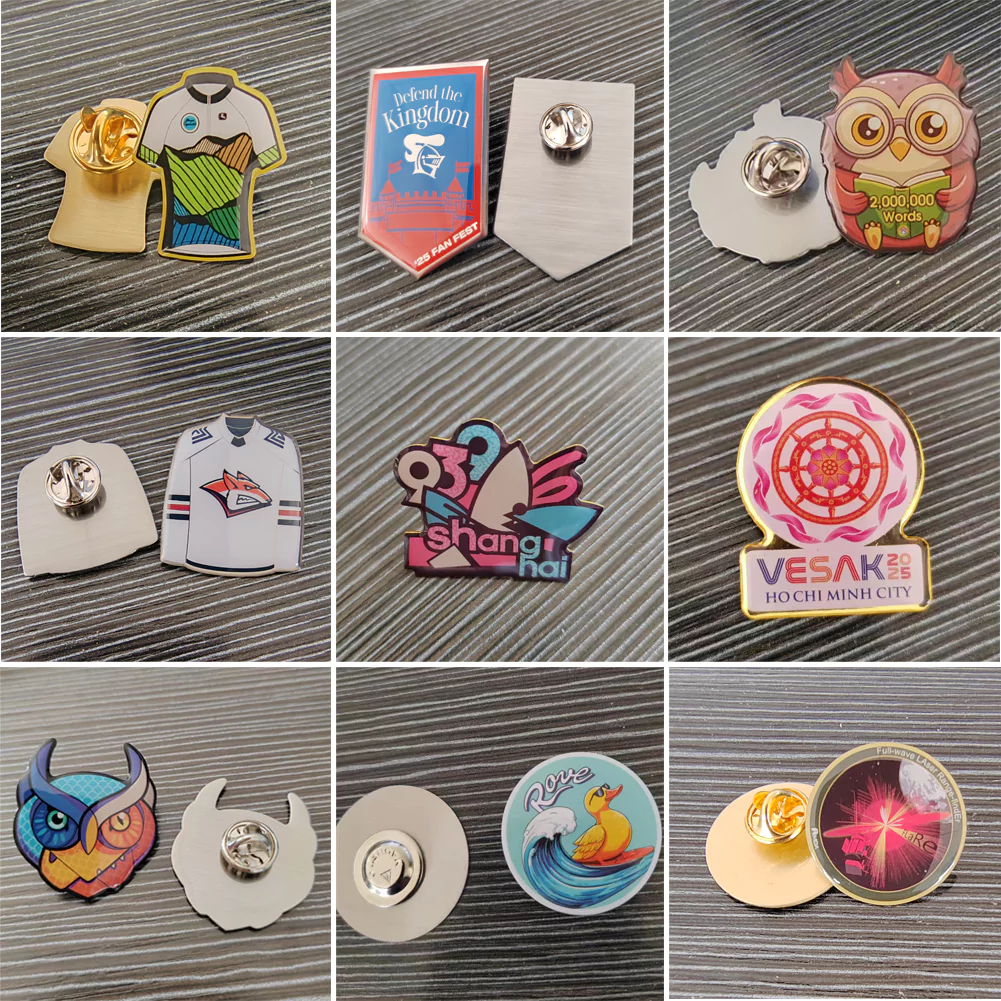
Printed pins are usually a flat metal base where the artwork is printed directly on the surface, often sealed with an epoxy dome for protection. They can reproduce gradients, tiny text, and photo-like details more easily than enamel.
Printed pins tend to feel smoother and more “graphic,” which suits modern illustrations, complex logos, and designs with lots of shading.
Which looks more premium at first glance?
Enamel pins generally look more premium because the metal lines and filled enamel create depth and texture. They catch light differently, and the raised outlines make the design feel crafted rather than simply applied.
Printed pins can still look excellent, especially with epoxy coating, but they usually appear flatter and closer to a badge or tag than jewelry-like.
Which holds up better to scratches and daily wear?
Enamel pins tend to handle everyday wear better, especially hard enamel, because the color is set into the metal and the surface can be polished flush. They still can scratch, but they often age more gracefully.
Printed pins are more vulnerable to surface damage because the artwork sits on top. Epoxy helps, but it can still scuff, yellow over time, or show wear at the edges.
Which is better for intricate art, gradients, and tiny text?
Printed pins are usually better for highly detailed art, gradients, and small lettering because printing can reproduce continuous tones. If a design includes subtle shading, watercolor effects, or photo elements, printed is often the cleaner match.
Enamel pins are better for bold, simplified shapes and strong color blocking. Tiny text can be done, but it is more likely to fill in or lose clarity depending on the manufacturer’s limits.
Which offers more color accuracy and consistency?
Printed pins can be closer to the original artwork if the file is color-managed well, since they are not constrained by enamel fill rules. That said, print results still vary with calibration and coating.
Enamel pins can be very consistent when using standardized enamel color charts, but exact brand colors are not always perfect. Their final look also depends on plating choice, lighting, and how thin lines are.
What are the typical price differences?
Printed pins are often cheaper per unit for complex designs because they avoid multiple enamel fills. They also reduce costs when a design uses many colors, gradients, or photographic elements.
Enamel pins can cost more due to molds, filling steps, and finishing. However, for simple designs and higher perceived value, enamel can offer better “cost per perceived quality.”
Which is faster to produce for deadlines?
Printed pins are typically faster because the process is closer to standard printing with fewer manual steps. That makes them a common choice for events, launches, or limited campaigns on a tight timeline.
Enamel pins often take longer due to mold creation and multiple production stages. Rush options exist, but lead times are usually less predictable.
Which is better for selling, gifting, or fundraising?
Enamel pins often sell better as collectibles because buyers associate them with durability and craftsmanship. They also photograph well for product listings due to their shine and depth.
Printed pins can be better for lower price points, large giveaways, and designs that rely on illustration detail. For fundraising, printed pins can help maximize margin on big runs, while enamel can justify a higher donation tier.
How should they decide based on the design?
They should choose enamel if the design is bold, uses solid colors, and benefits from metal outlines and texture. It is also a strong choice when a premium, long-lasting impression matters.
They should choose printed if the design uses gradients, complex shading, tiny details, or needs a fast, cost-effective run. When the artwork looks like a mini poster, printing usually preserves it better.
So which is better overall?
Custom enamel pins are usually better for a premium look, long-term durability, and collectible appeal. Printed pins are usually better for intricate artwork, faster turnaround, and cost efficiency at scale.
If they are unsure, a simple rule helps: enamel for bold icons and “luxury feel,” printed for detailed illustrations and tight deadlines.
FAQs (Frequently Asked Questions)
What are the main differences between custom enamel pins and printed pins?
Custom enamel pins are metal pins with recessed areas filled with colored enamel, offering a tactile, high-end look and durability. Printed pins have artwork printed directly on a flat metal base, often sealed with an epoxy dome, allowing for fine detail, gradients, and budget-friendly production.
Which type of pin looks more premium at first glance?
Enamel pins generally appear more premium due to their raised metal outlines and filled enamel that create depth and texture, giving a crafted jewelry-like feel. Printed pins look smoother and flatter, resembling badges or tags rather than luxury items.
Which pin type is more durable against scratches and daily wear?
Enamel pins, especially hard enamel, handle everyday wear better because the color is set into the metal and can be polished flush. Printed pins are more vulnerable to surface damage as the artwork sits on top; epoxy coatings help but can scuff or yellow over time.
Are printed pins better for intricate designs and tiny text?
Yes, printed pins excel at reproducing intricate art, gradients, tiny lettering, and subtle shading like watercolor effects because printing supports continuous tones. Enamel pins suit bold shapes and solid colors but may lose clarity in very fine details.
How do price and production speed compare between enamel and printed pins?
Printed pins are often cheaper per unit for complex designs due to fewer manual steps and no multiple enamel fills. They also have faster turnaround times ideal for tight deadlines. Enamel pins cost more because of mold creation and filling steps and usually take longer to produce.
Which pin type is better for selling collectibles or fundraising campaigns?
Enamel pins typically sell better as collectibles due to their durability, craftsmanship, and premium appearance. Printed pins work well for lower price points, large giveaways, or designs needing detailed illustration reproduction. For fundraising, printed pins maximize margins on big runs while enamel justifies higher donation tiers.
See Also: 5 benefits of choosing custom enamel medals for events.

Be First to Comment